


Sacsayhuaman Peru Ruins: The Stone Giants Guardians Of Cusco
Did you know that Sacsayhuamán was one of the most important sites of the Inca?
When you think of Peru, it’s natural for the iconic Machu Picchu to come to mind. However, there is another equally captivating and historic place that deserves your attention: Sacsayhuaman. This ancient Inca fortress, located in the mountains northeast of Cusco, is an archaeological gem that will leave you amazed. And if you’re planning a trip to Peru, you can’t overlook the experience of visiting Sacsayhuaman – and especially when choosing to see the site with a private transfer and tour which is the most comfortable option for tourists staying in Cusco.
In this comprehensive guide, we’ll explore everything you need to know about the Sacsayhuamán Peru ruins. This includes the ancient history of this site, the most important structures to see, as well as other key nearby sites that are worth visiting. As well as showing how you can best visit this incredible site with ease, we’ll also answer your most frequently asked questions in our FAQ section.
Everything You Need To Know About Sacsayhuamán Peru Ruins
Why Is Sacsayhuamán Ruins Worth Visiting?
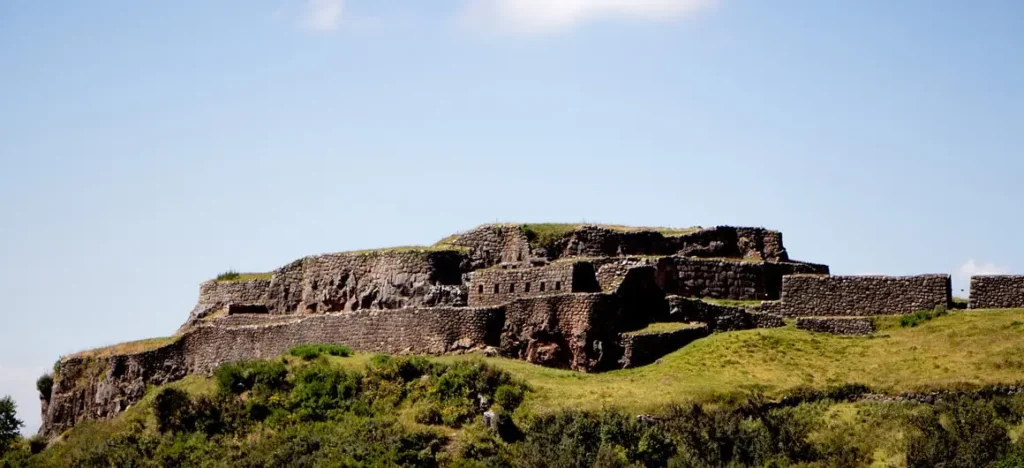
Sacsayhuaman is an archaeological site which is known for its imposing Inca walls that have protected various sanctuaries for centuries. These walls not only bear witness to the architectural mastery of the Incas but also to their skill in construction that defies the passage of time.
The most impressive features of Sacsayhuaman are its zigzag walls and the three bases that once supported Inca towers. In addition to the walls, you will have the opportunity to explore an ancient water pool, possibly used for astronomical observations. From this location, panoramic views of the beautiful Cusco valley unfold, allowing you to grasp the majesty of the Andean geography.

Where Is Sacsayhuamán Located?
Sacsayhuamán ruins are located on top of a hill just north of Cusco, close to the famous Cristo Blanco (Christ statue) which can be seen when looking directly north from the historic center. It’s roughly a 15 minute private taxi drive from the historic center to reach these ruins, although it’s also possible to walk here from the heart of the city – which takes around 45-60 minutes on the ascent – and similar when returning back down to the city.
However it’s important to take your time both when getting here and also while exploring the site itself, given the higher altitude of these ruins. Situated up at 3701m / 12,142ft above sea-level, it’s important to take frequent breaks and to stay well-hydrated to avoid getting any altitude sickness related symptoms. We also highly recommend using sunscreen and wearing a hat – given the hotter sunshine in these higher Andes elevations.
The Incredible History Of Sacsayhuamán Ruins
Early Ancient Beginnings
Sacsayhuaman, whose name originates from the Quechua language and translates as ‘Satisfied Falcons,‘ is an imposing stone construction erected by the Incas in the 15th century.
The history of Sacsayhuamán Peru ruins dates back long before the height of the Inca Empire, with archaeological evidence suggesting that earlier cultures had already settled around the area prior. This includes the Killke culture, who occupied parts of Cusco between 900-1200 A.D – where researchers have found that some structures within Sacsayhuamán (such as the sector of Muyuqmarca) had original foundations which pre-date the temples built during the times of the Inca.
Once the Inca began their expansion across the Andes from the 13th century onwards, monumental expansion of Sacsayhuamán ruins began under the reign of Pachacuti – who transformed this area overlooking Cusco into one of the most important complexes of the entire Inca empire. Although its exact purpose remains a mystery, it is believed to have served as a defensive fortress or a place of worship. This is because of its elevated position which made it strategically important, although its connection with religious Inca traditions also suggests that Sacsayhuaman may have also been used as a sacred ceremonial center.
The Height Of The Inca Rule And Spanish Conquest
During the very peak of the Inca Empire, Sacsayhuamán became one of the most impressive architectural achievements in the entire Andes regions throughout South America.
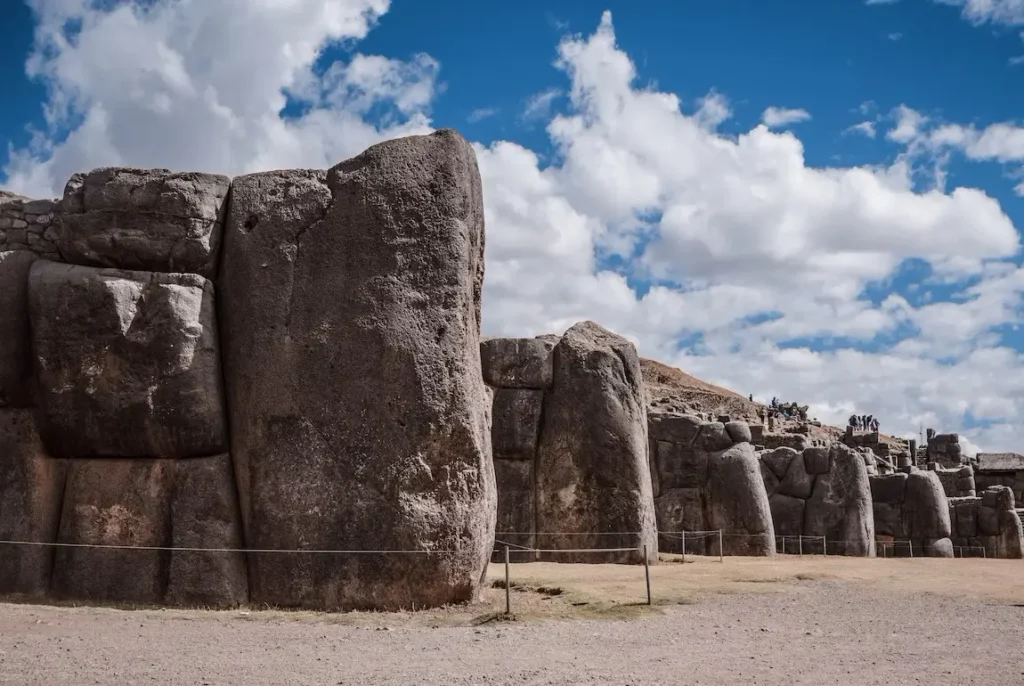
The most impressive aspect of Sacsayhuamán is the enormous stones used in its construction. Some of these stones weigh several tonnes and fit together perfectly without the use of mortar, an astonishing architectural achievement for the time. Most incredibly, some of these giant individual stones are estimated to weigh as much as over 100 tonnes, which was an incredible achievement in a time where there was no machinery to help.
However, everything changed following the Spanish conquest of Cusco in 1533. During the great Inca rebellion of 1536, Inca forces occupied Sacsayhuamán and used its strategic position in order to attack the city of Cusco, which was now under Spanish rule. Following many fierce battles, the site eventually fell to the Spanish, and Sacsayhuamán would then begin to be dismantled over the next several centuries – with smaller stones being reused in churches and other buildings throughout Cusco – although some have since been recovered and can be seen in the famous Inca Museum and others around the city.

Sacsayhuamán Cusco Ruins In The Modern Era
Following Peru’s independence three centuries later in 1821, Sacsayhuaman remained an important historical site, however was also neglected and crumbling in areas.
During the early 20th century, growing interest from explorers and archaeologists helped bring greater awareness to the significance of this ancient stronghold – which would soon turn this site into one of the most important Inca treasures throughout the entire Peruvian Andes. A particularly important development came in 1944, where the Inca festival of Inti Raymi was revived after centuries of ban and outlaw under Spanish rule. Although this festival was once celebrated in the heart of Cusco city, Sacsayhuamán was chosen as the setting for modern reenactments – which take place every year on the 24th of June.
Today, Sacsayhuaman Cusco ruins is a protected archaeological park, and remains one of the most fascinating attractions that tourists can visit within Cusco. During a guided private tour, we can admire its enormous zigzagging stone walls and mysterious history behind each sector, as well as the original foundations which were first laid here by cultures such as the Killke. Tourists can also enjoy the sweeping views across Cusco and the Andes from on top of the site, which are especially breathtaking during the early morning and late afternoon.
What To See And Do In Sacsayhuaman
The Rodadero (Suchuna)
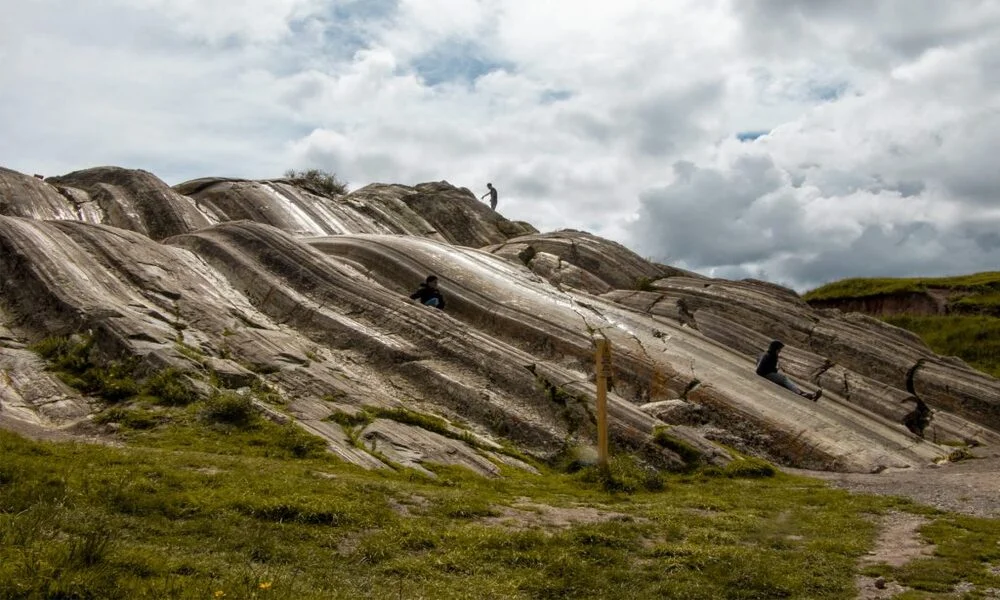
A large, natural limestone formation, the Rodadero was believed to have been used for ceremonial purposes by the Inca, given its smooth and curved stone surfaces. Resembling giant slides, its unique shape makes it one of the most distinctive sites to see in Sacsayhuaman – caused by both natural erosion processes and most likely modifications from the Inca themselves over time.
The Muyuqmarka Towers
The remains of Muyuqmarka are an especially fascinating, yet mysterious part of Sacsayhuaman Cusco ruins which are worth exploring. Here we can see the ancient foundations of a circular Inca tower, which gives us clues into how this site may have functioned ceremonially. It’s also within the same quarter where the Killka culture once laid original foundations before the Inca arrived.
The Giant Stone Walls
The walls of Sacsayhuaman are undoubtedly the best highlight of a guided day tour around these ruins. Its massive stone blocks fit so precisely that not even a sheet of paper can be inserted between them. You can walk along these walls and enjoy panoramic views of Cusco, which were all built together in such a way that they formed the shape of a Puma head when viewing from far above.
Other Unique Highlights
Sacsayhuaman offers a variety of other highlights for visitors within the ruins. One experience you can’t miss is photographing the Queuña trees (polylepis), native to Cusco – while for history and astronomy enthusiasts, climbing the rocky stairs will lead you to a natural formation of limestone known as hatun tiyana, which were used by Andean priests to study the movement of the stars.
Private Transportation And Tours To Sacsayhuamán
Discover the grandeur of Sacsayhuamán through private transportation with Cusco Transport & Tours, elevating your experience with exceptional elegance and comfort. With well-maintained vehicles and expert drivers, the company provides personalized attention and a rich historical perspective, ensuring a worry-free exploration of the Inca fortress.
The flexible schedules of Cusco Transport & Tours allow you to customize your itinerary, while exclusive additional services, such as private guides, add a special touch to your adventure. The straightforward booking with the company guarantees a seamless journey from the center of Cusco to Sacsayhuamán, backed by professionals committed to delivering a unique experience.
Furthermore, if you opt for our private transfers service, you’ll have the chance to make stops at local craft centers. There, you can not only admire and purchase crafts but also feed llamas, alpacas, vicuñas, and guanacos. Additionally, you can visit textile centers where authentic garments and handmade decorative items are produced, perfect as souvenirs for your loved ones.
Other Nearby Inca Sites That Are Worth Visiting Along With Sacsayhuamán Cusco
There are also many other incredible sites above Cusco which are easy to visit directly from Sacsayhuamán – although driving will still be necessary for those that are located slightly further out. All of these ancient ruins are included on the Boleto Turístico Ticket, meaning you can visit them free of charge once you have purchased your ticket.
The Q’enqo Altar
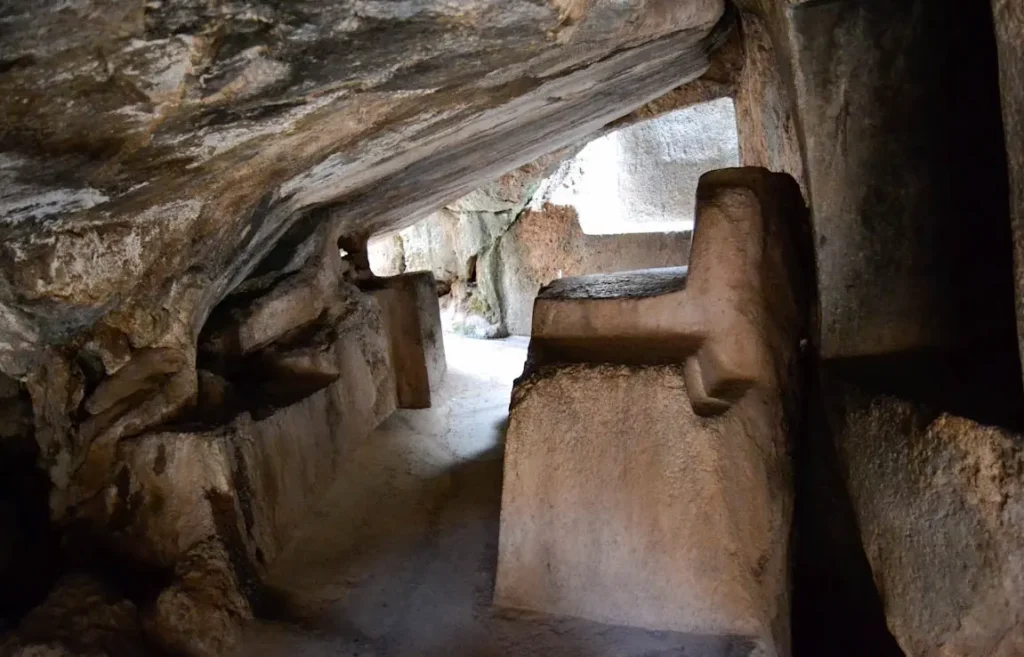
Very close to Sacsayhuaman, you will find the archaeological complex of Q’enqo, where the Incas performed religious ceremonies. Explore the rock-carved galleries and discover the history sculpted on its walls
Tambomachay
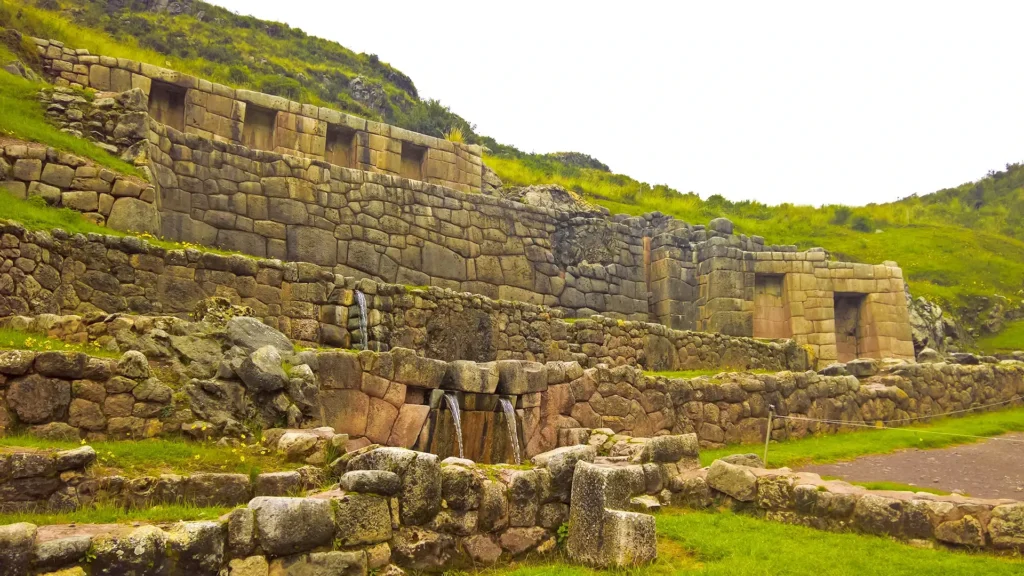
This site is dedicated to the worship of water and features impressive fountains and water channels. It is a mystical place that will make you feel the Incas’ connection with nature.
Puca Pucara
Another nearby site worth visiting. It is believed to have served as a sort of checkpoint on the way to Cusco, and can also be visited with ease close to site such as Tambomachay and Sacasayhuman with a guided private tour.
Frequently Asked Questions about Sacsayhuamán
Sacsayhuamán is an ancient Inca fortress constructed with large stone blocks. It is believed to have served both as a military fortification and had ceremonial purposes.
Sacsayhuamán is located 2 km from the center of Cusco, Peru.
Sacsayhuamán is an ancient Inca fortress located near Cusco, Peru. It is famous for its impressive stone structures and its historical and cultural significance.
The archaeoastronomical importance of Sacsayhuamán lies in its potential connections to astronomical events and celestial cycles. It is suggested that its design could have been aligned with solstices, equinoxes, constellations, and lunar cycles, possibly serving to mark ceremonial and agricultural periods. However, these interpretations are ongoing theories, as the lack of Inca written records requires some speculation on the part of researchers.
To enter Sacsayhuamán, you will need to purchase a Partial Tourist Ticket for Cusco. The ticket costs S/.70 (approximately $18 USD) and is valid for 2 days. Additionally, the ticket also includes entry to the archaeological sites of Qenqo, Puka Pukara, and Tambomachay.
If you plan to visit other archaeological sites, either in the Sacred Valley or the South Valley, excluding Machu Picchu, we recommend purchasing the General Tourist Ticket for Cusco (BTC), which is valid for two days. This ticket also allows you to visit some museums in downtown Cusco.
It is recommended to bring comfortable shoes, water, sunscreen, a hat, and, during cooler months, a warm jacket.
Start your visit early in the morning to avoid the crowds and to enjoy the cooler temperatures.
Take your time and explore the ruins at your own pace.
Be sure to visit the main plaza, the zigzag walls, and the Three Towers.
If you’re feeling energetic, you can hike to the top of the hill for stunning views of Cusco.
There are several restaurants and cafes near the entrance to Sacsayhuamán where you can grab a bite to eat or a drink before or after your visit.
Overview Of Sacsayhuaman Ruins
And that’s all for this guide on why you should visit the incredible Sacsayhuamán Peru ruins.
Situated just a stone’s throw away from Cusco central historic center, this ancient site was once one of the most important for the Inca civilization – which was believed to have served as a defensive stronghold, ceremonial temple, and also as a sacred religious site. Today travelers can easily wander the site with ease from Cusco to see its incredible structures – although before your visit it’s worth learning how this site was built, as well as how to plan the most enjoyable trip possible.
Are you ready to explore the most incredible destinations and sites within the Sacred Valley and immediate Cusco region? Here at Cusco Transport & Tours, our Sacred Valley Ancient Ruins Tour is the perfect option for learning about key sites such as Sacsayhuamán and Pisac ruins with our expert tour guides – while also including private and flexible transport for the most seamless journey.